Finishing Compounds: Metal Polishing Compound for Buffing Wheels
Finishing Compounds: Metal Polishing Compound for Buffing Wheels
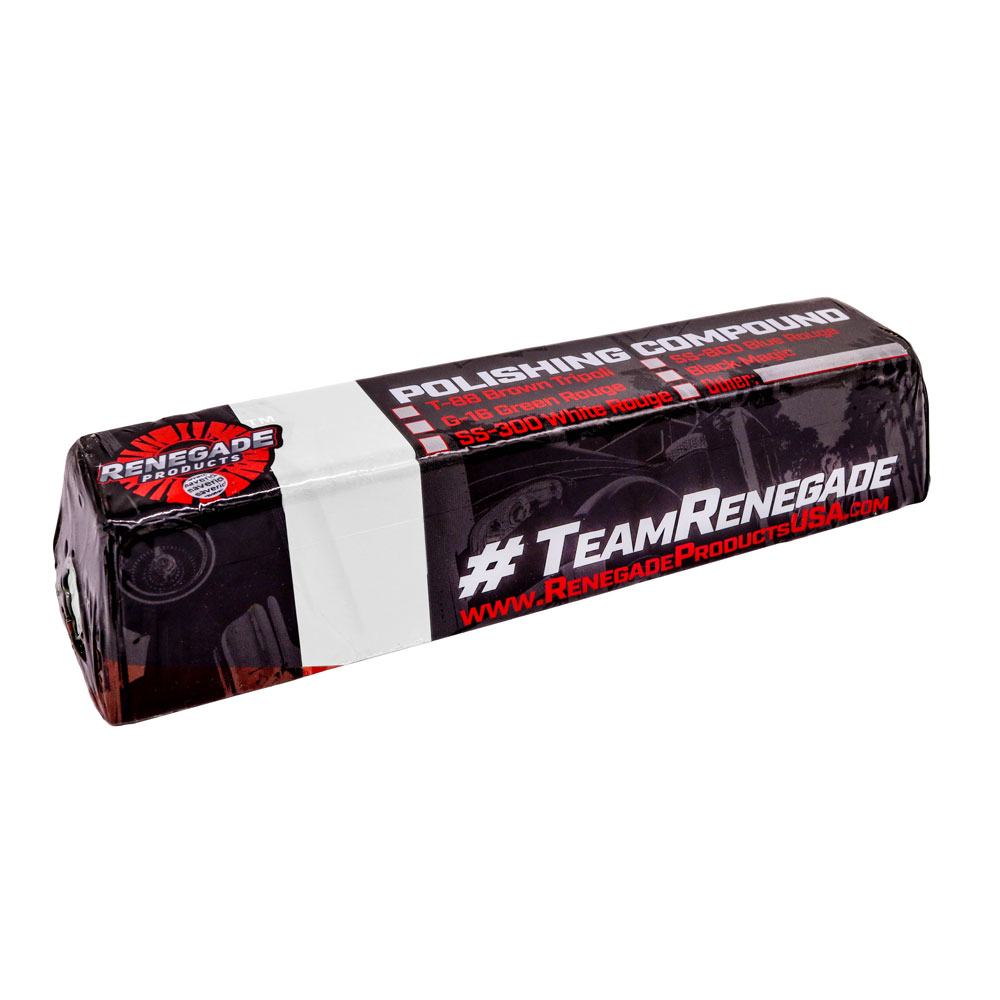
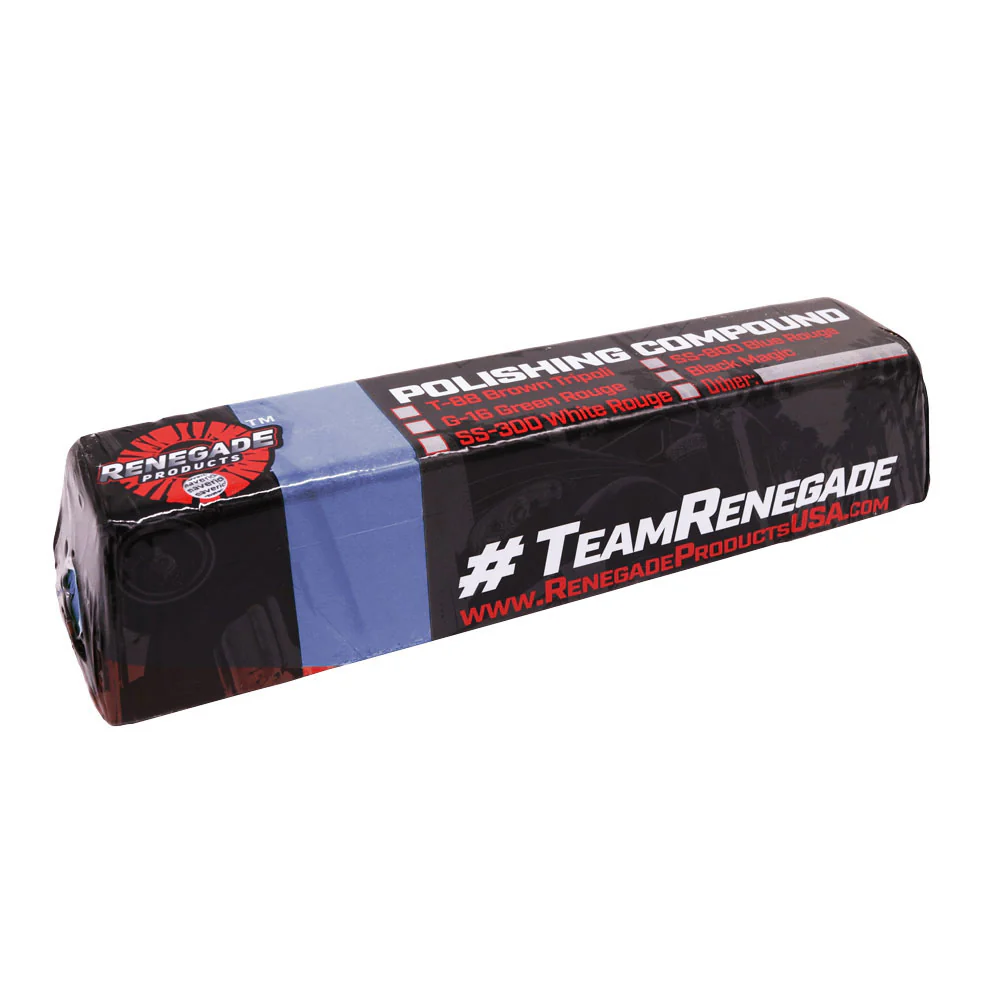
Renegade Products is the premier manufacturer of polishing compounds that are robust in quality due to our use of premium raw materials. We do not use cheap fillers in our polishing compounds like other manufacturers that prioritize profit over bar quality.
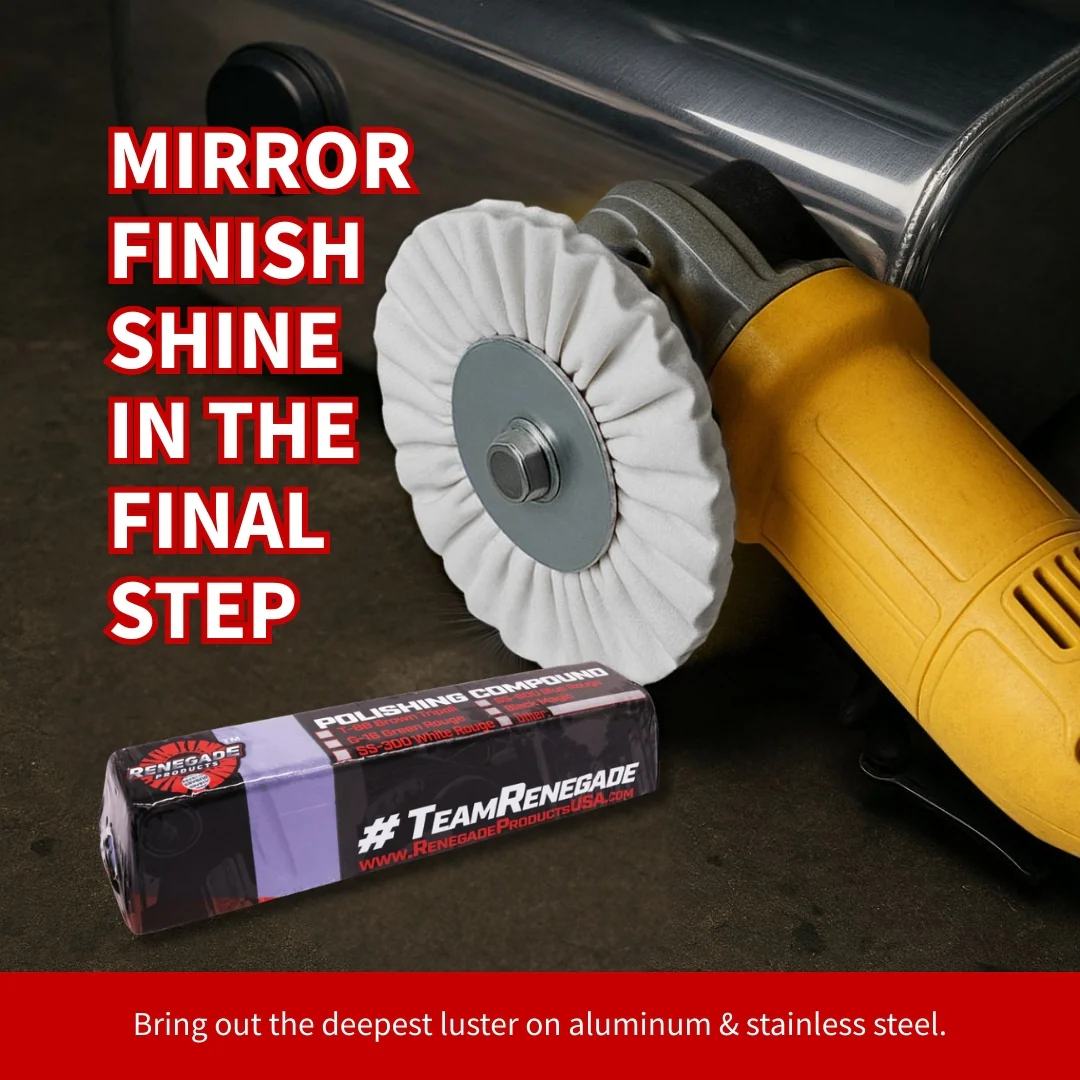
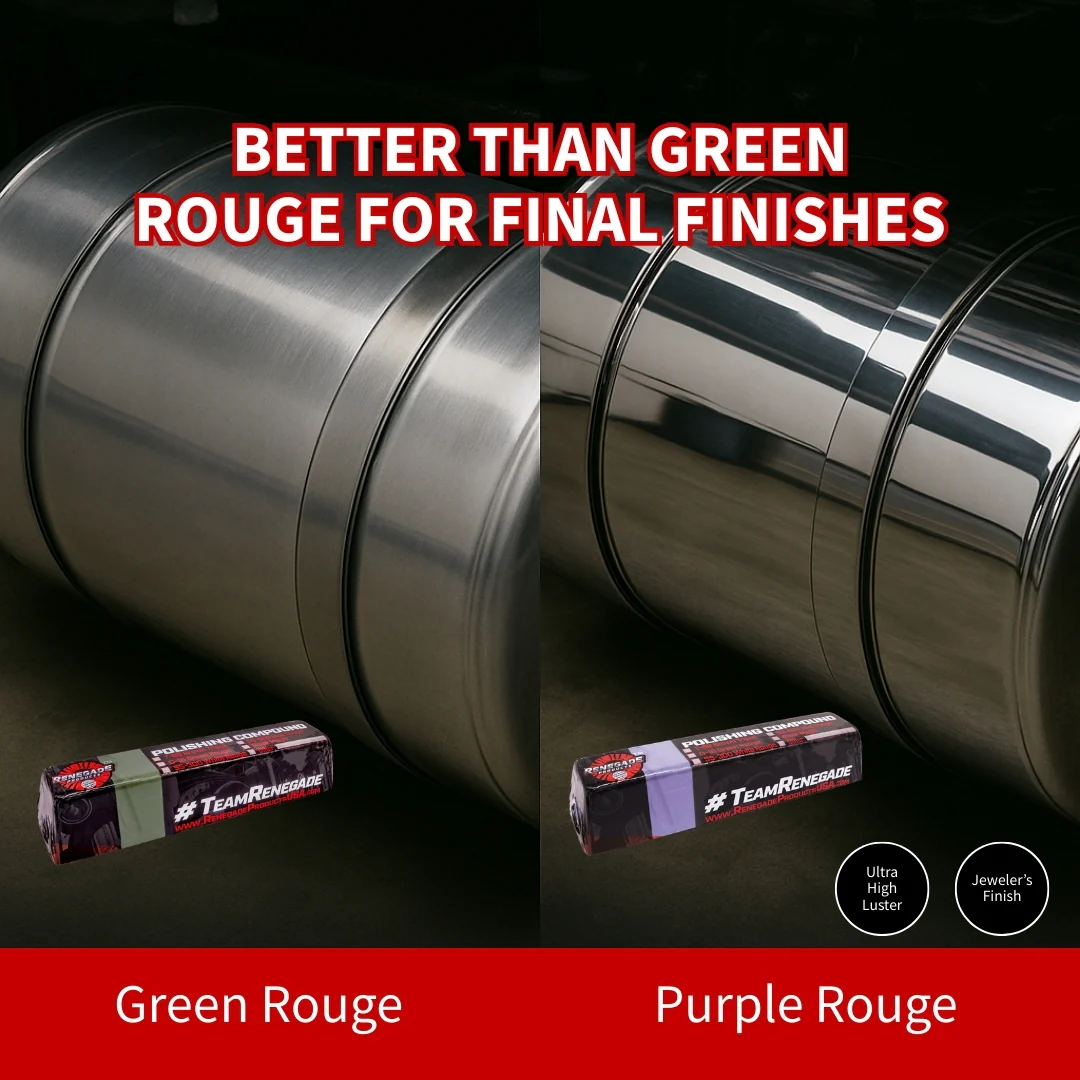
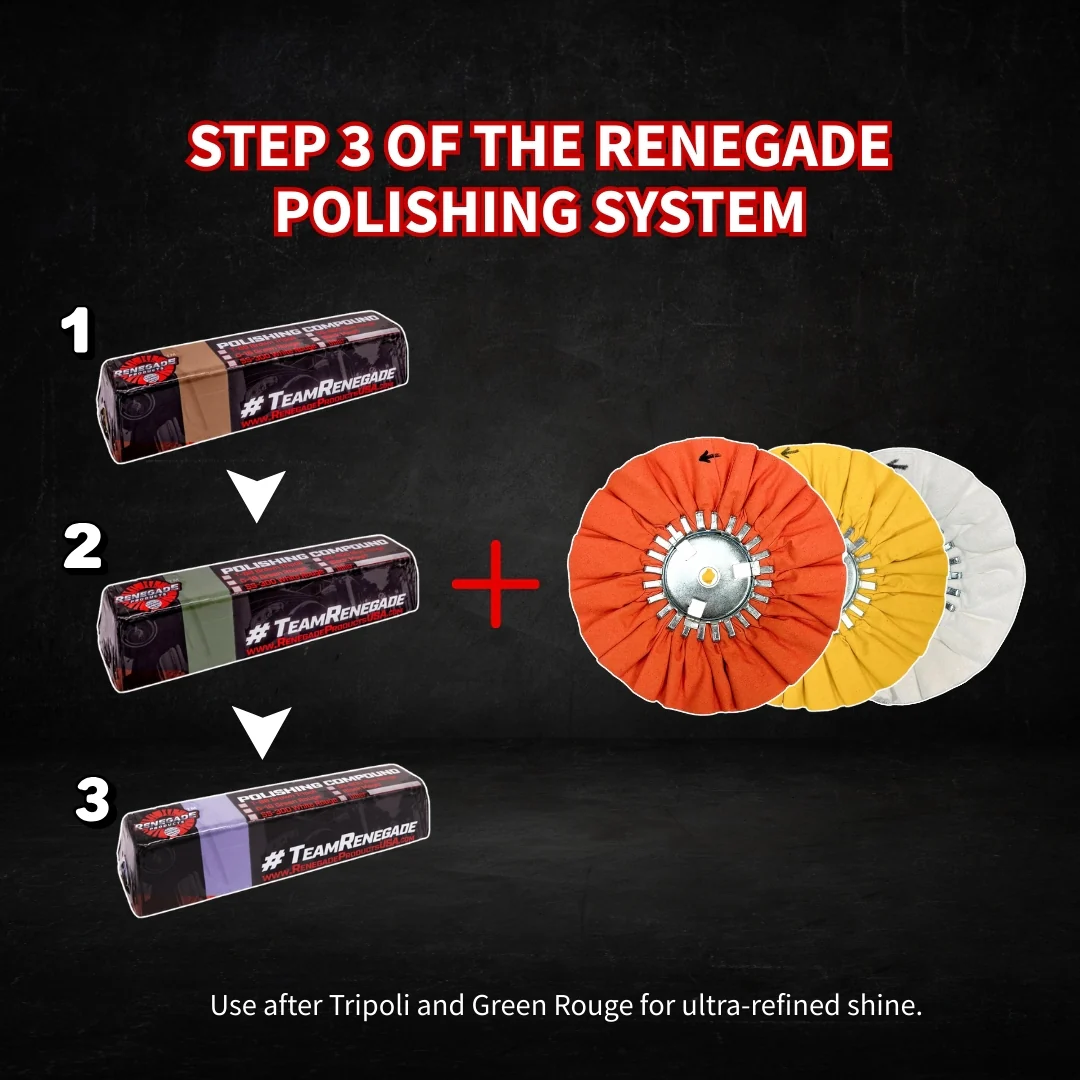
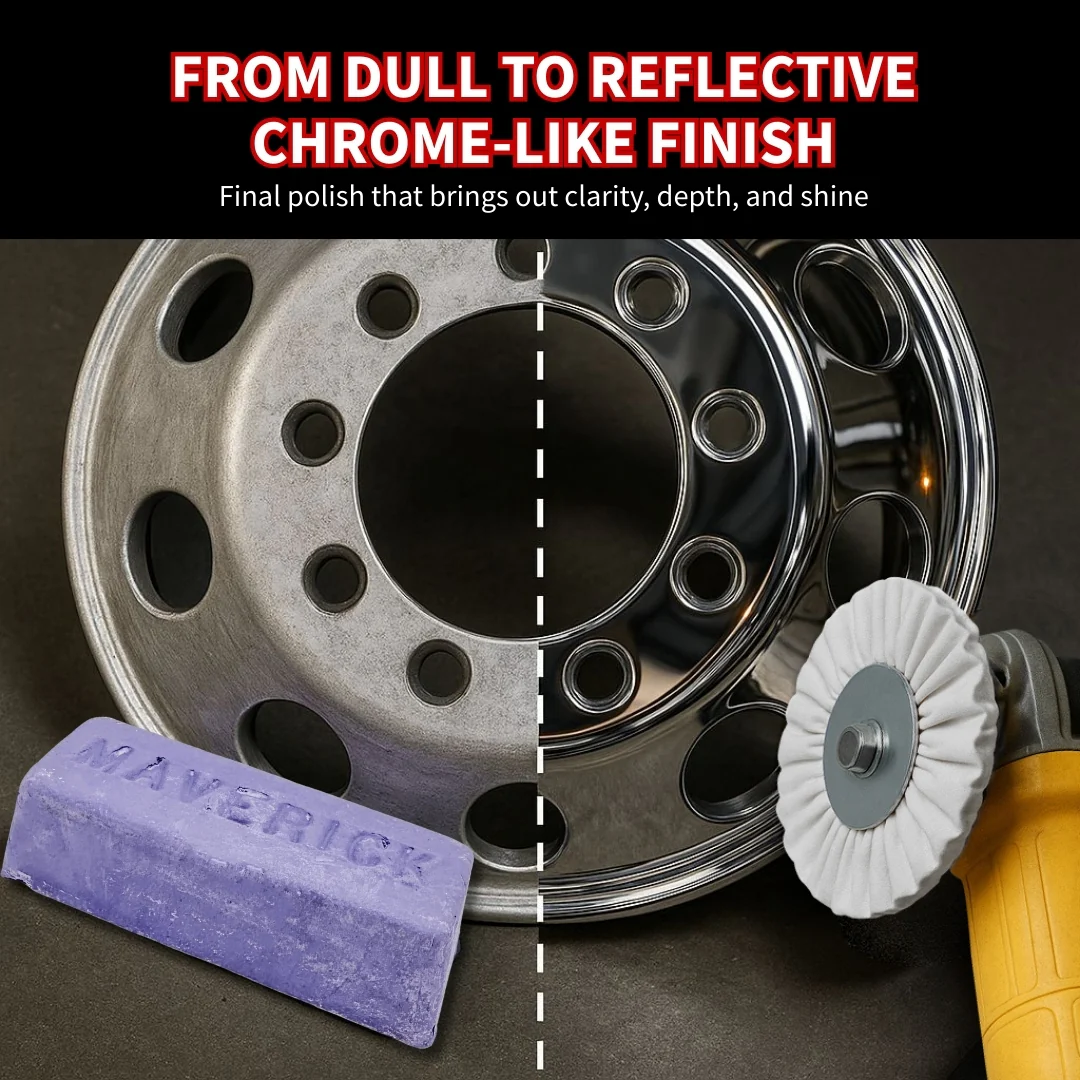
Our Finishing Compounds bring the ultimate shine and luster on top of your two-stage polish--use these if you are looking for a like-new, liquid metal type of shine.
What are metal polishing compounds?
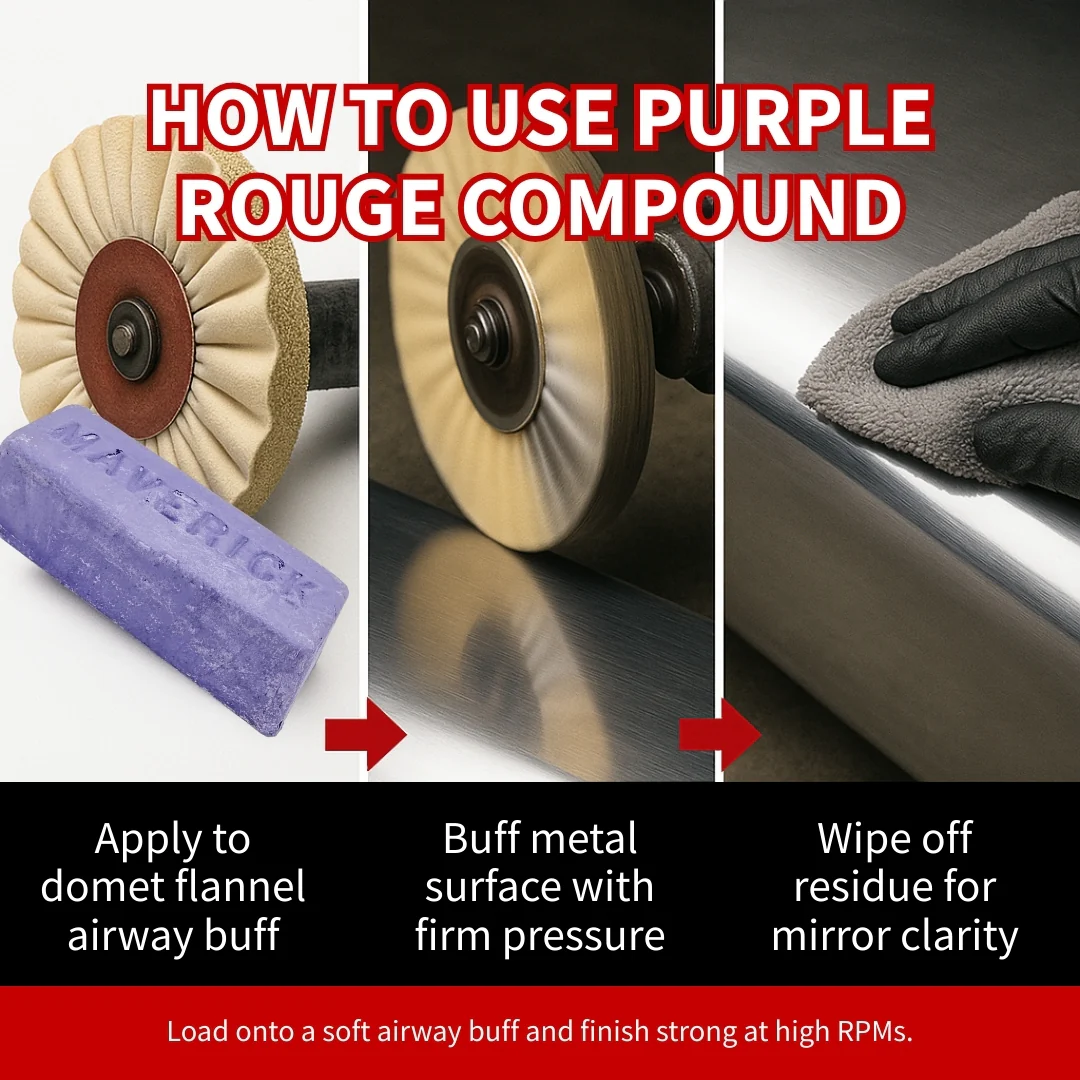
Our metal polishing compounds are used with our Airway Buffing Wheels to increase the effectiveness of the wheel while being used during the cutting, buffing, and polishing process. Some are of a coarser consistency and are usually used to remove scratches while the others are finer, which lends to them being used to shine and finish your work. They should be applied to Airway Buffing Wheels by coating the edges of the airway buffs like below:

What Metal Polishing Compound Should I Use?
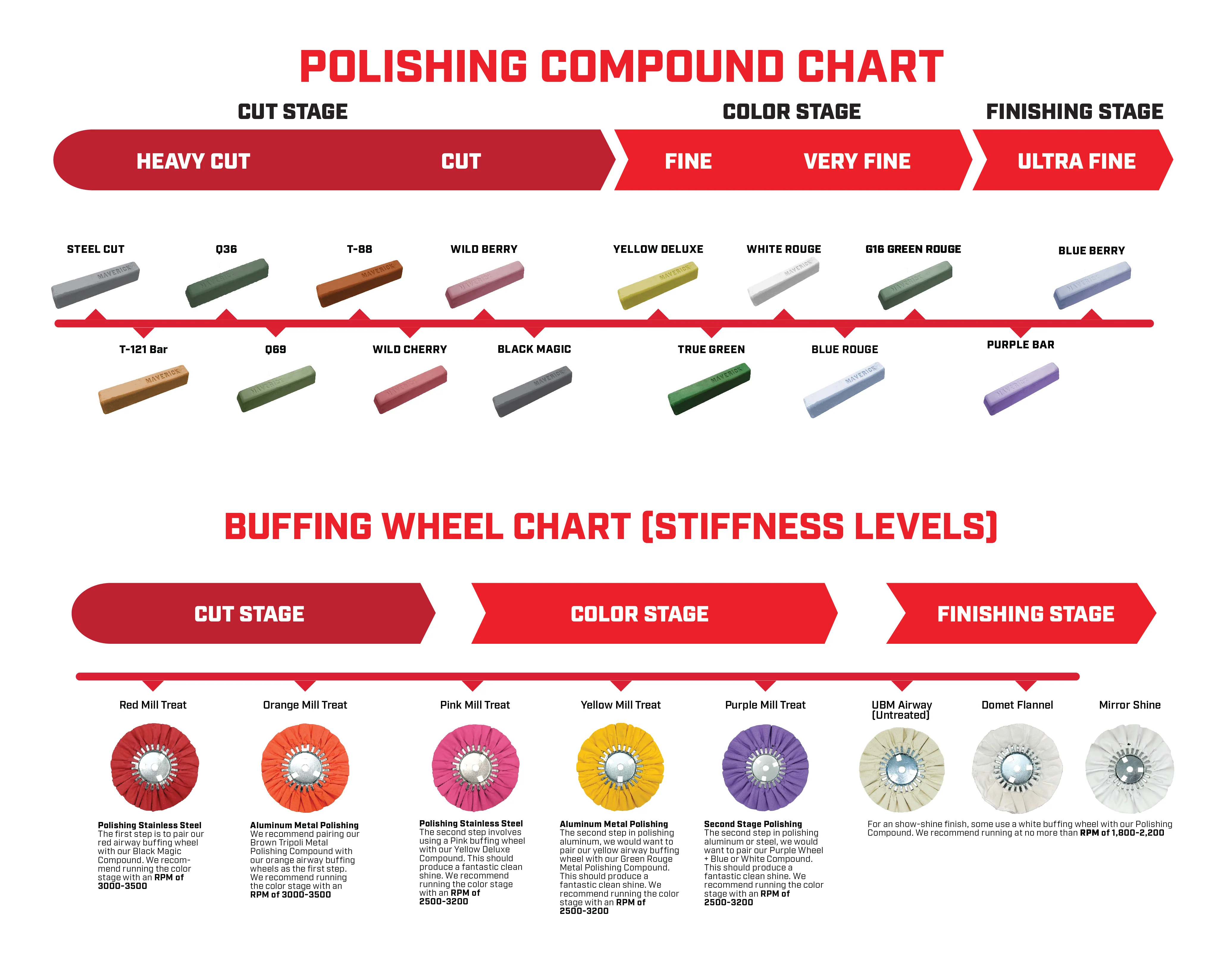
To determine which polishing compounds are most appropriate for your project, we've listed them below along with some basic characteristics regarding their performance:
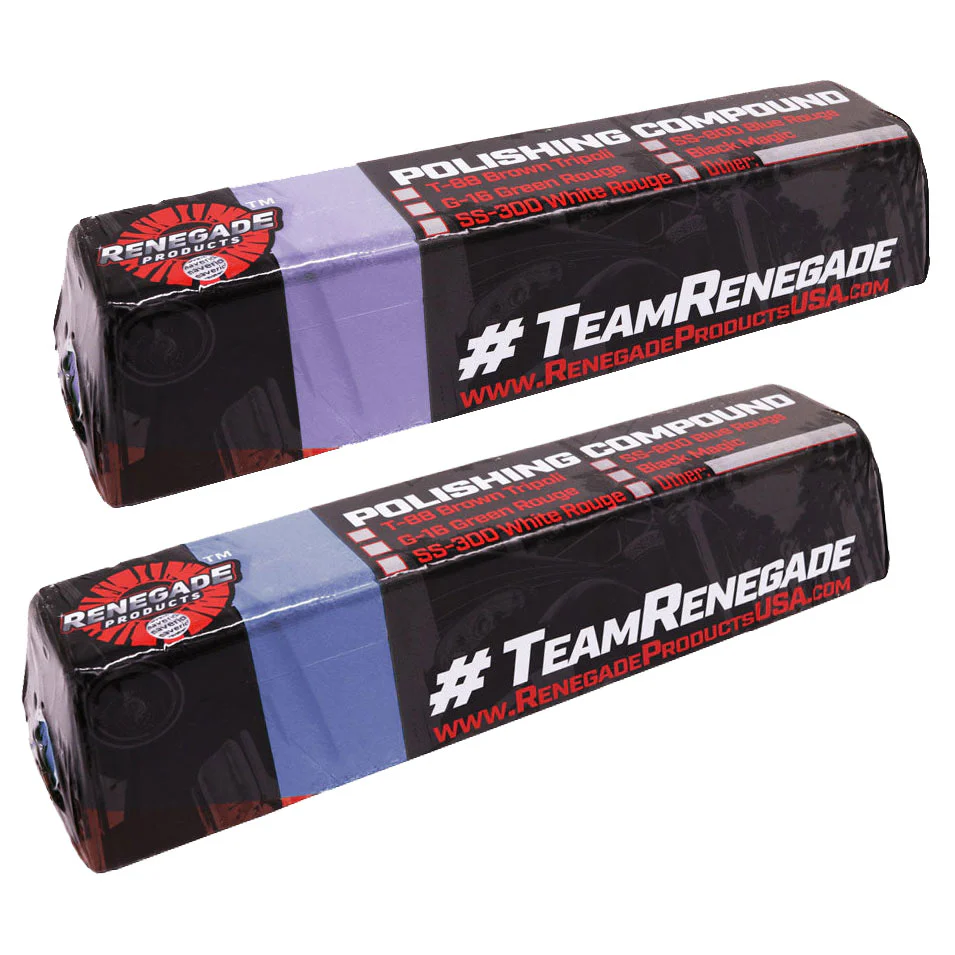
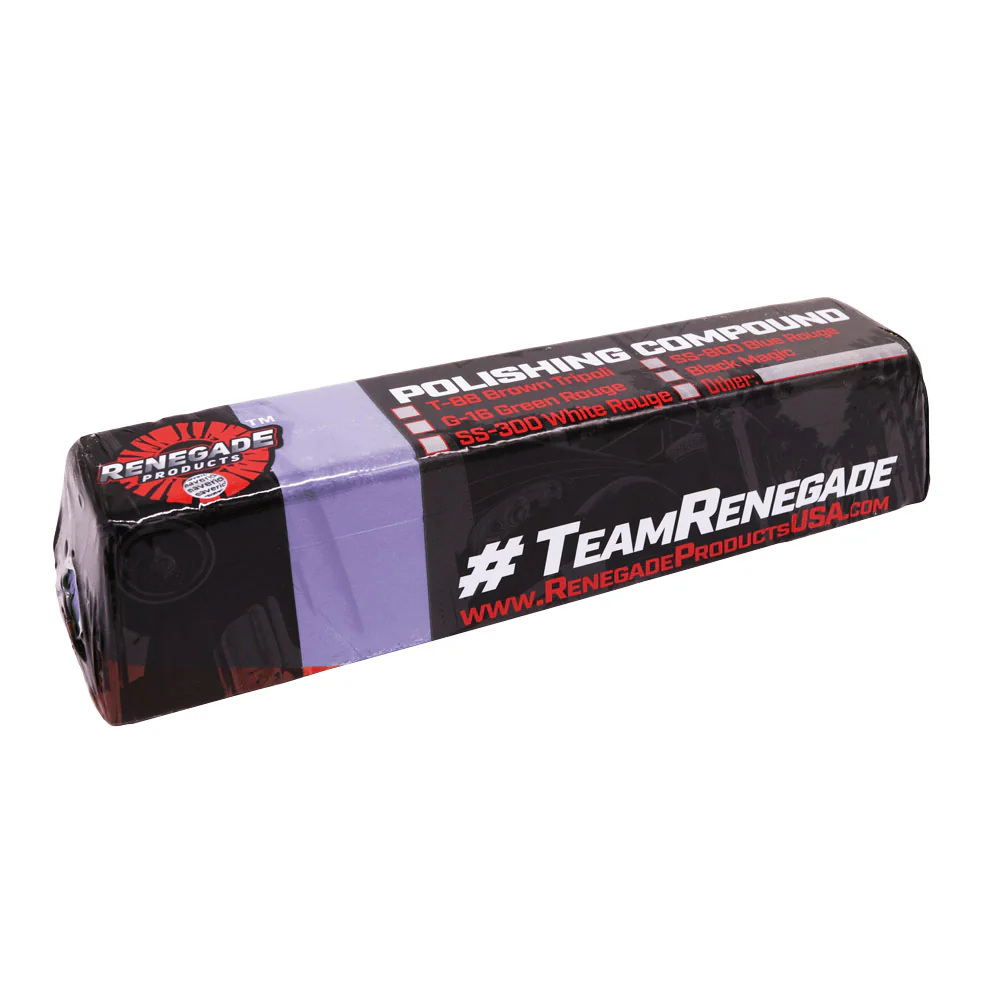
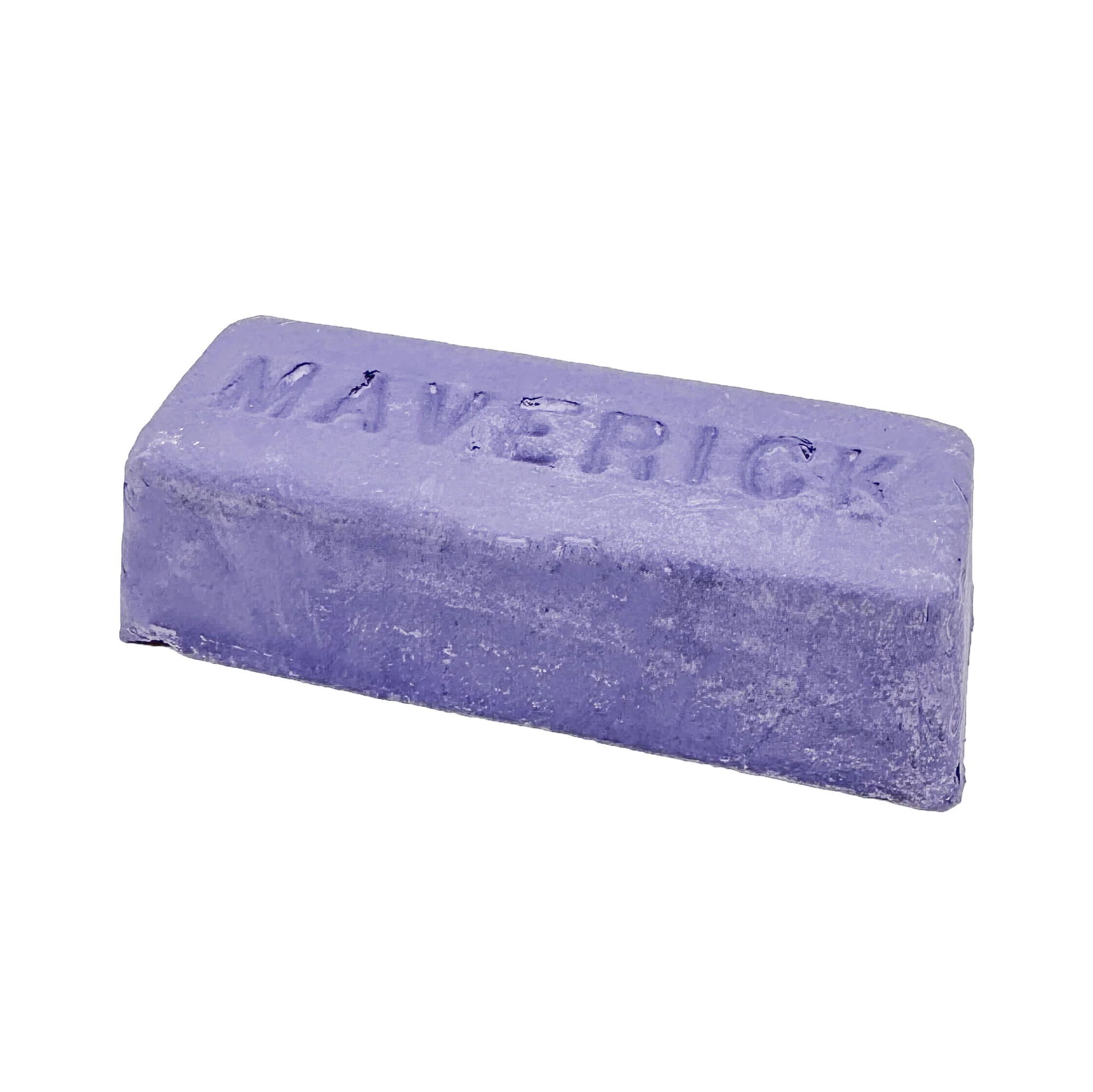
Competition Purple
-
- Finishing Bar
- Balanced consistency: neither “wet” nor “dry”
- Contains fine abrasive grains
- Cutting ability: 2/10
- Dryness: 5/10
- Ideal for use in low to high humidity levels
- Ideal for use in low to high temperatures
-

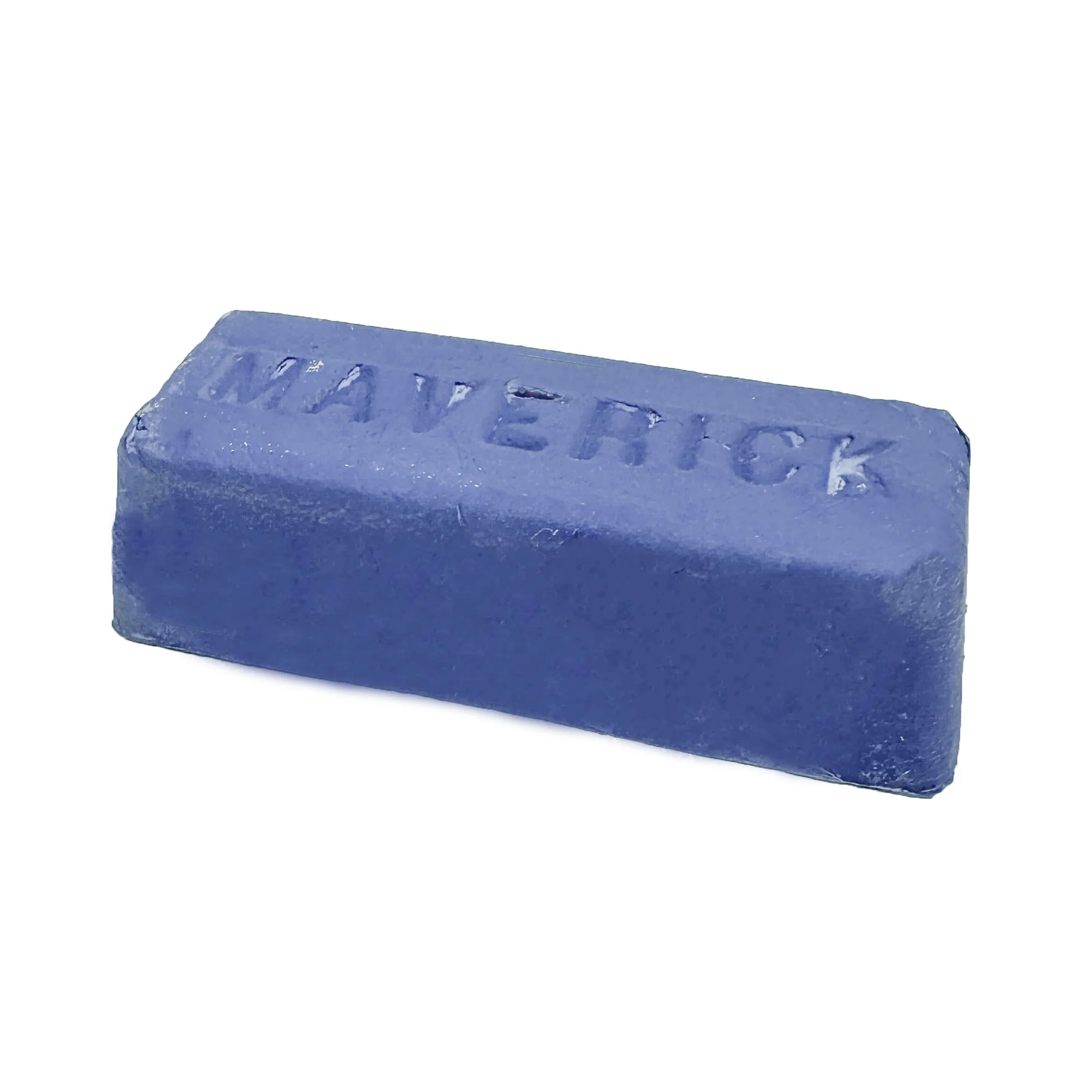
Blueberry
-
- Finishing Bar
- Contains super-fine abrasive grains
- Considered a “very dry” bar
- Cutting ability: 1/10
- Dryness: 6/10
- Ideal for use in low to high humidity levels
- Ideal for use in low to high temperatures

What Polisher/Grinder is most common with polishing compounds & buffing wheels?
- MAKITA 9237C- The best 3,500 RPM polishing machine (PROS & BEGINNERS)
- MAKITA GA7021 - The best 6,000 RPM polishing machine (PROS)
How do I prep for polishing?
- When metal polishing, proper preparation of the surface is almost entirely all about sanding. We recommend starting with 180 grit and stepping forward to 220 grit, and and moving to 400 grit sanding discs. In many cases, Aluminum can be polished well after prepping with 400 grit—though one may choose to move up to 600 or 800 grit before polishing with Brown Tripoli Polishing Compound.
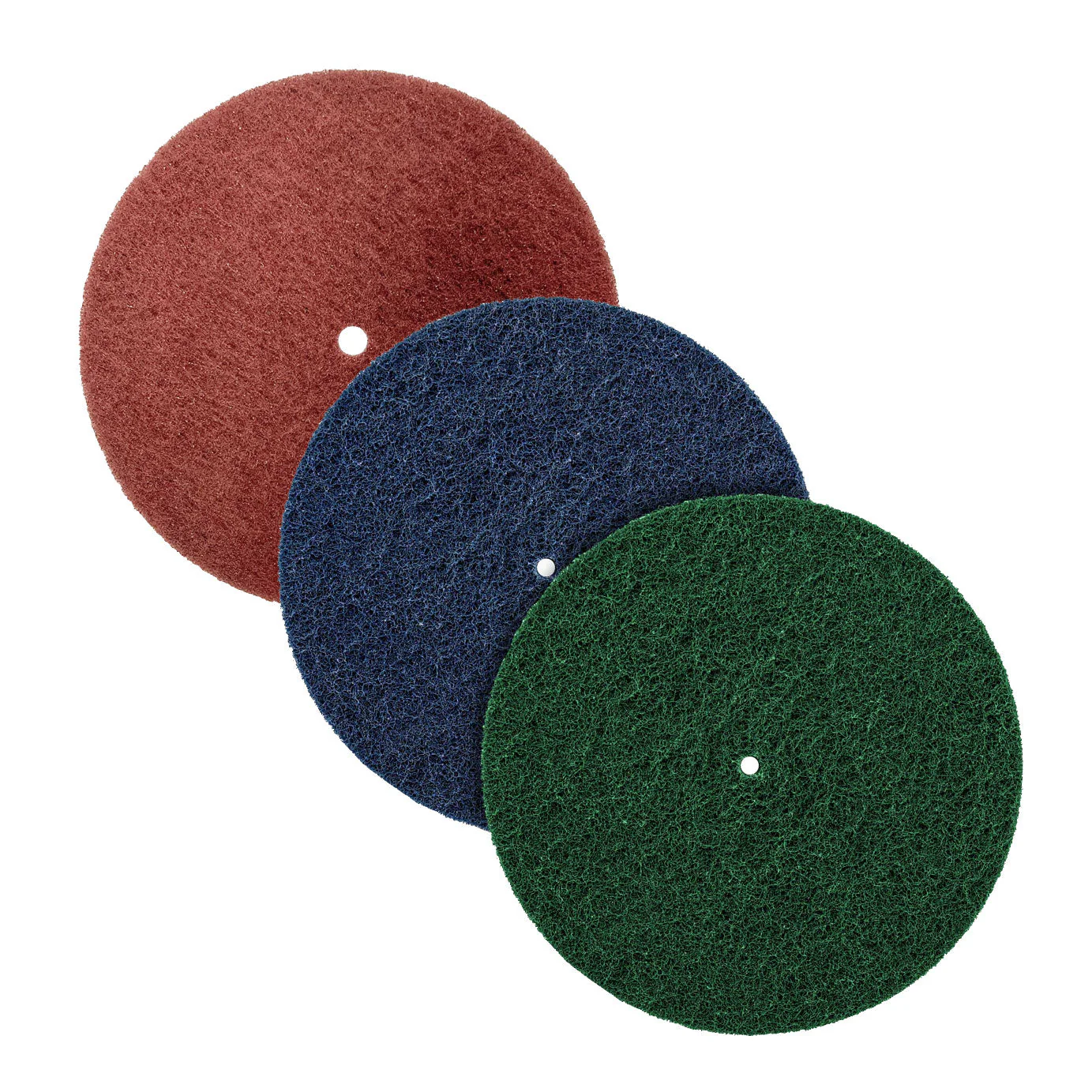
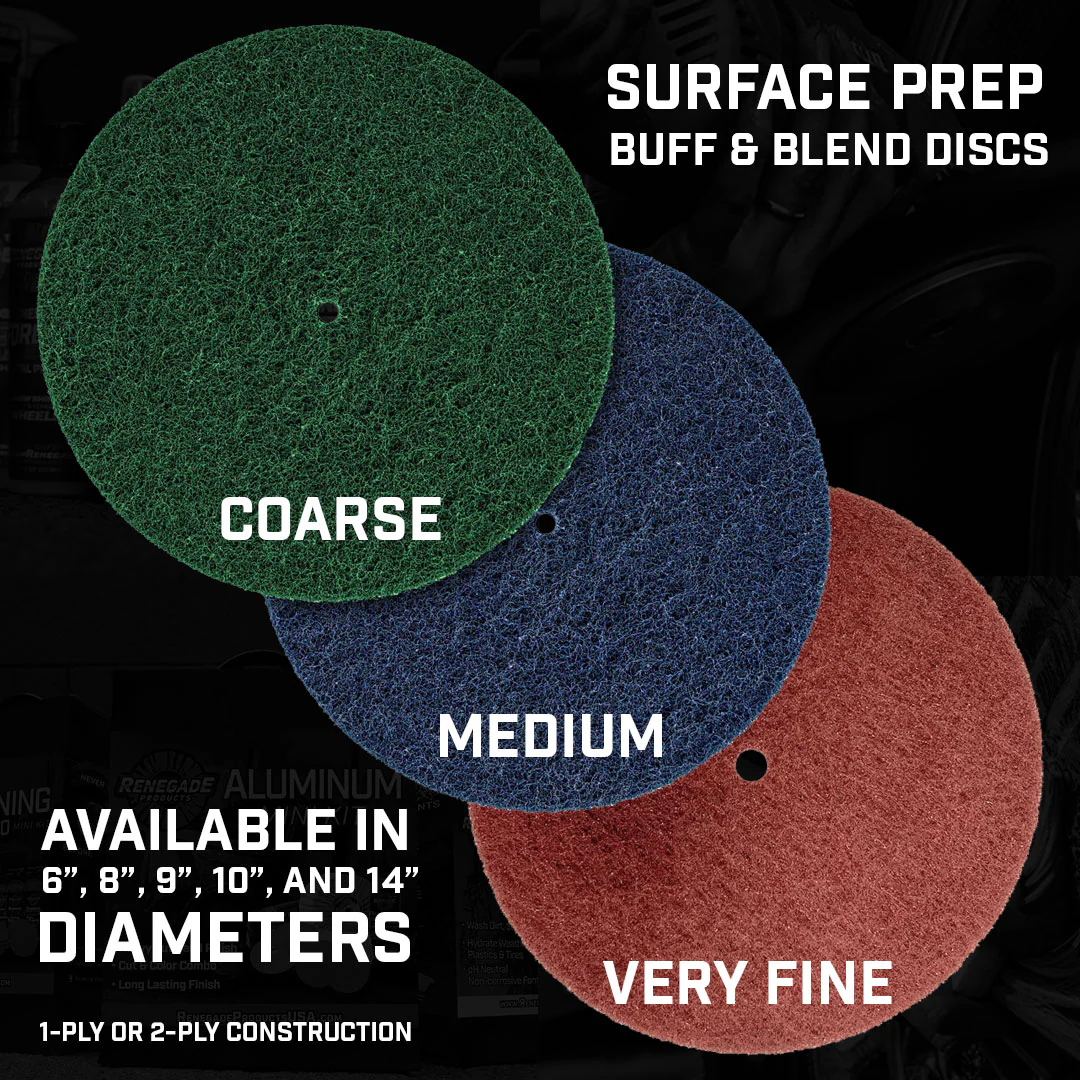
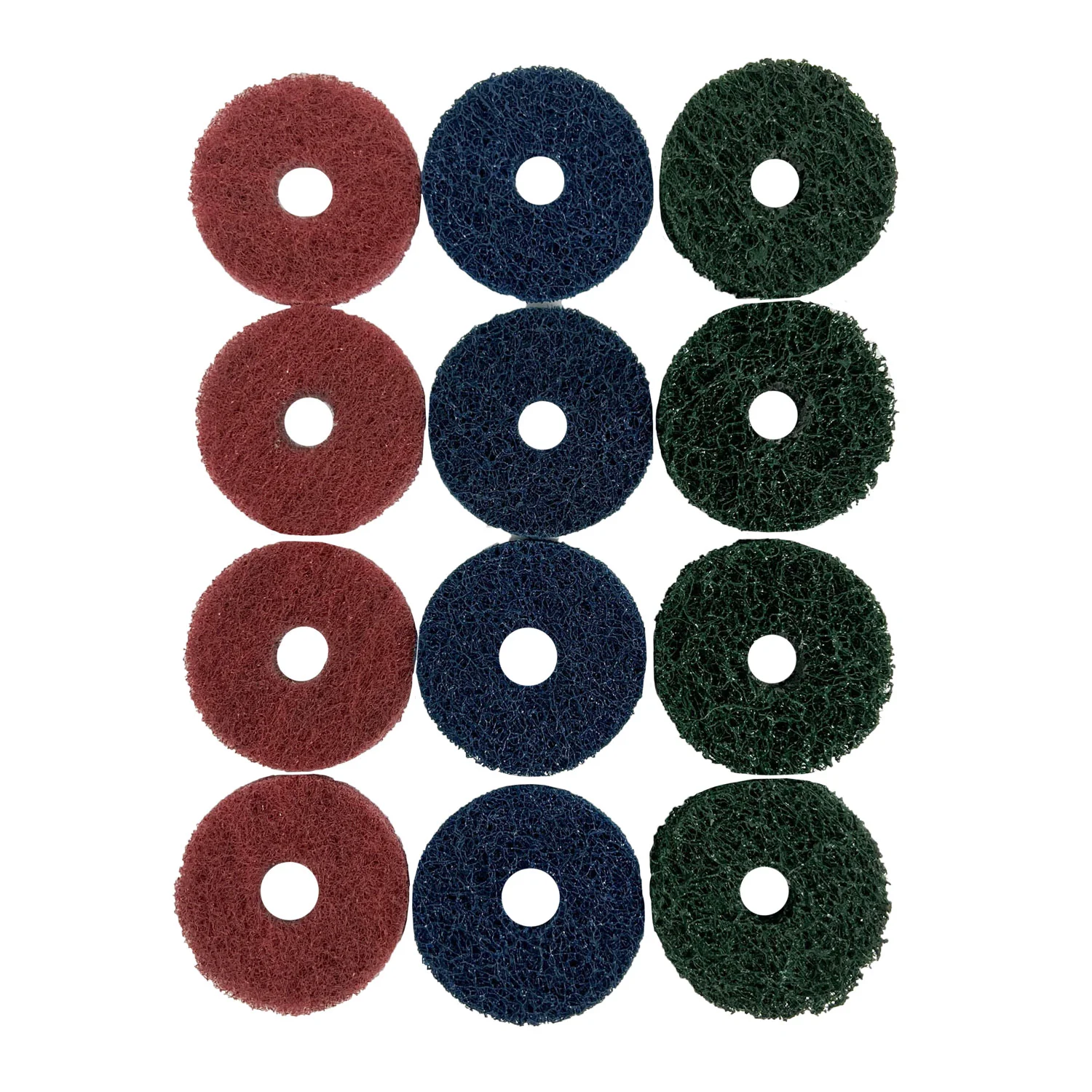
- As an alternative to sanding discs, one of most popular products is the Medium Blue Surface Prep Buff and Blend Disc. Most users will not need a coarse Green Buff and Blend Disc, as those are often used on more severe restoration and polishing jobs, such as the wheels on concrete trucks. The Medium Blue Buff and Blend Disc can help remove dirt, grime, and rust from a wheel, providing a clean surface to machine polished with an Airway Buffing Wheels and Polishing Compound.
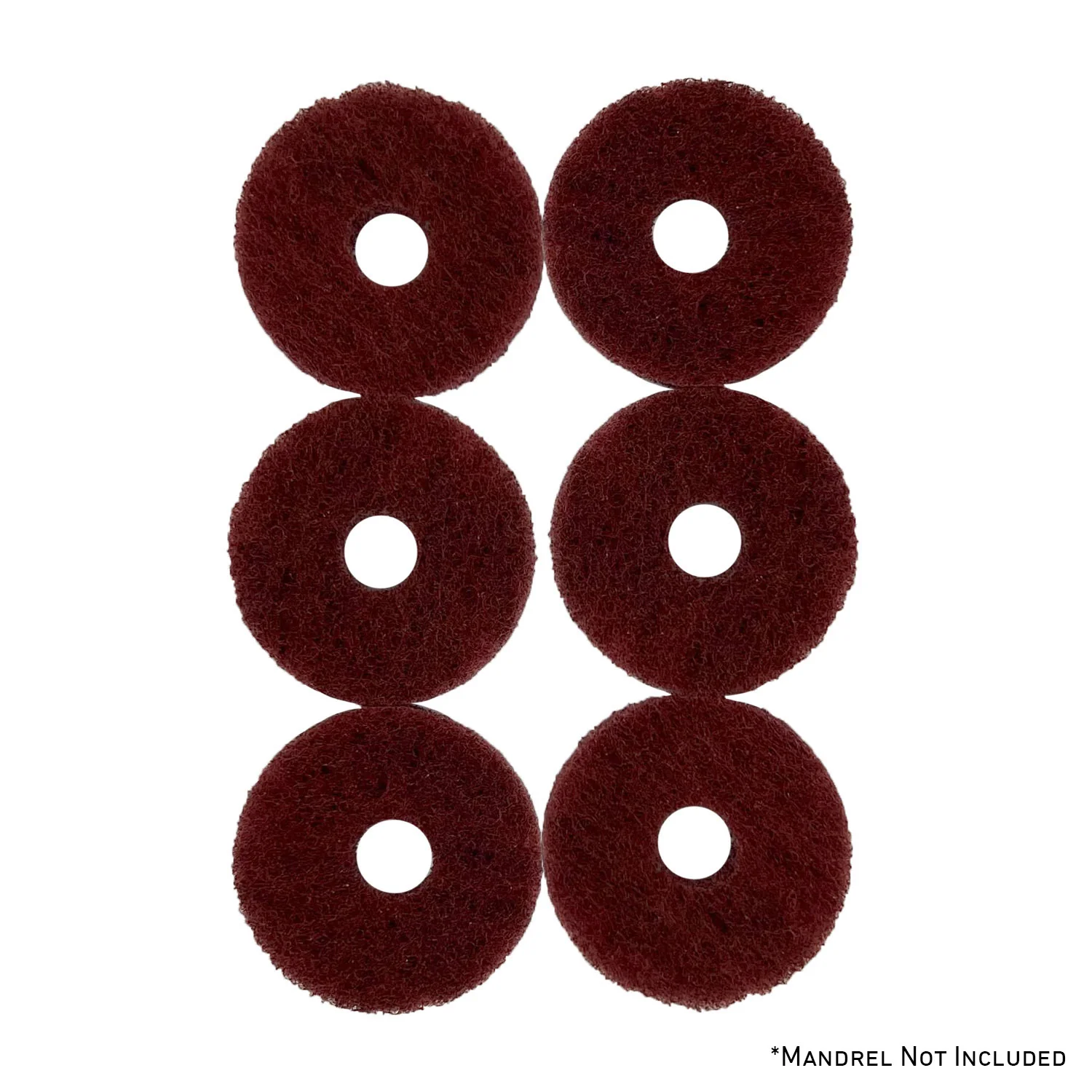
- We do recommend using a Maroon Satin Airway Buffing Wheel after using the Blue Medium Buff and Blend Disc, as the Buff and Blend Disc may leave some coarse hash marks that may be difficult to polish out without proper refining.
What do the colors mean for metal polishing compound?
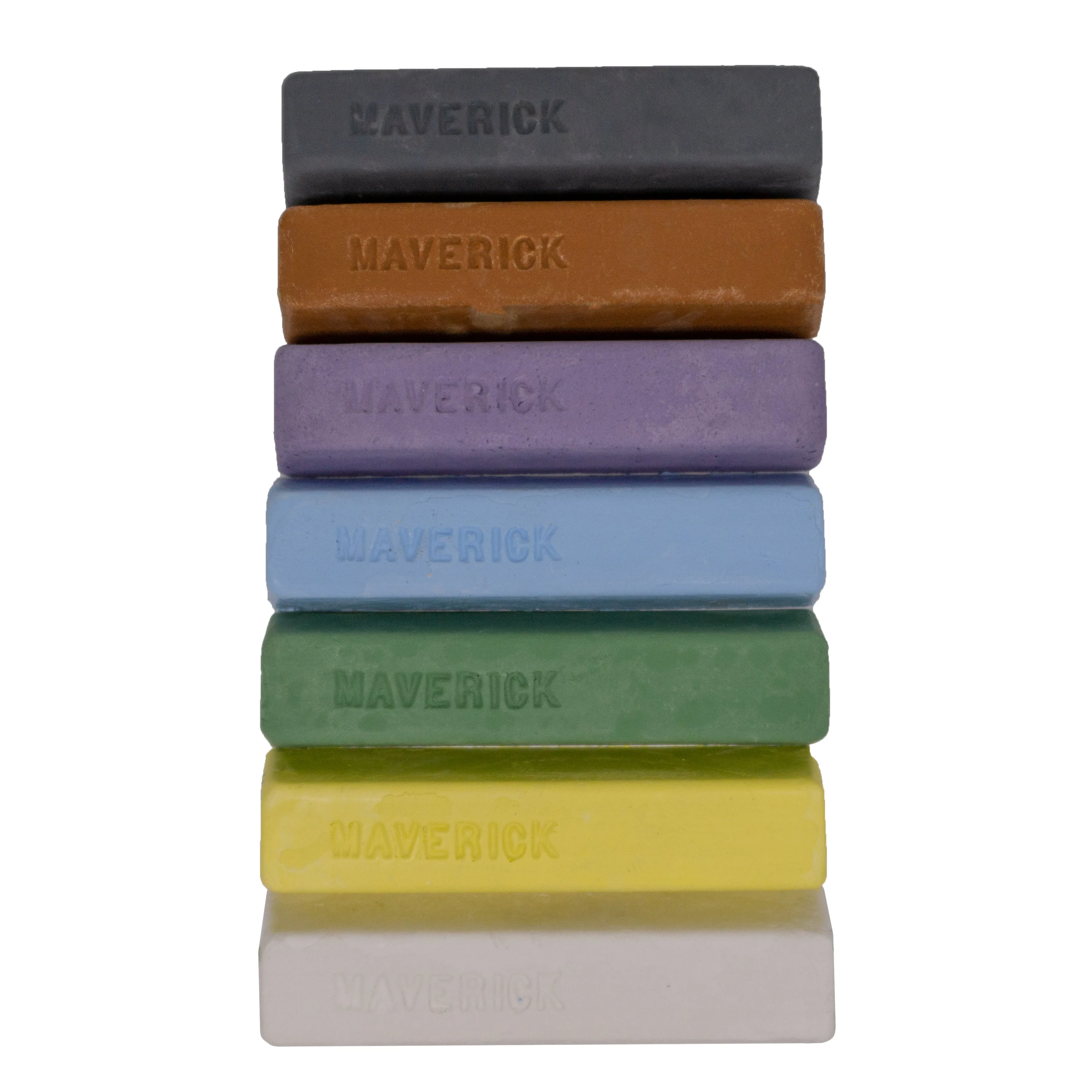
- The color of the polishing compound is almost always a byproduct of the natural abrasive ingredients. Tripoli powder, pictured below for example, is an abrasive product that along with the other formula's ingredients allows the buffing wheel to polish a metal surface. These abrasives are often pigments as well causing the bar color to take on the appearance of the abrasive.
- In situations where similar in color appearances have substantially different abrasive qualities, many manufactures (ourselves included) can add separate pigment or dye to help differentiate the products.

Pro tip:
- Use our Renegade Red Liquid Metal Polish, Renegade Pro Red, and Renegade Pipe Dream Chrome Conditioner and Polish liquid metal polishes between major cuttings to help maintain a show-quality shine on your vehicles.
What speed should I move the buffing wheel across the surface?
- We captured the below video as a guide of how fast you should drag the buffing wheel across the metal surface.
-
Buffing Wheel Speed for Metal Polishing from Renegade Products USA on Vimeo.
- The SDS Sheets for our Metal Polishing Compounds can be found below:
- SDS Sheet for T88 Brown Tripoli Compound
- SDS Sheet for G16 Green Rouge Compound
- SDS Sheet for T121 Fast-Cut Brown Tripoli Compound
- SDS Sheet for SS800 Blue Rouge Compound
- SDS Sheet for SS615 Yellow Deluxe Compound
- SDS Sheet for SS11 Black Magic Compound
- SDS Sheet for SS300 White Rouge Compound
- SDS Sheet for SS510 Competition Purple Compound
- SDS Sheet for Q36 Illudium One-Step Compound
Product Information
Product Information
Shipping & Returns
Shipping & Returns
Finishing Compounds: Metal Polishing Compound for Buffing Wheels
Finishing Compounds: Metal Polishing Compound for Buffing Wheels
Finishing Compounds: Metal Polishing Compound for Buffing Wheels
Renegade Products is the premier manufacturer of polishing compounds that are robust in quality due to our use of premium raw materials. We do not use cheap fillers in our polishing compounds like other manufacturers that prioritize profit over bar quality.
Our Finishing Compounds bring the ultimate shine and luster on top of your two-stage polish--use these if you are looking for a like-new, liquid metal type of shine.
What are metal polishing compounds?
Our metal polishing compounds are used with our Airway Buffing Wheels to increase the effectiveness of the wheel while being used during the cutting, buffing, and polishing process. Some are of a coarser consistency and are usually used to remove scratches while the others are finer, which lends to them being used to shine and finish your work. They should be applied to Airway Buffing Wheels by coating the edges of the airway buffs like below:
What Metal Polishing Compound Should I Use?
To determine which polishing compounds are most appropriate for your project, we've listed them below along with some basic characteristics regarding their performance:
Competition Purple
-
- Finishing Bar
- Balanced consistency: neither “wet” nor “dry”
- Contains fine abrasive grains
- Cutting ability: 2/10
- Dryness: 5/10
- Ideal for use in low to high humidity levels
- Ideal for use in low to high temperatures
-
Blueberry
-
- Finishing Bar
- Contains super-fine abrasive grains
- Considered a “very dry” bar
- Cutting ability: 1/10
- Dryness: 6/10
- Ideal for use in low to high humidity levels
- Ideal for use in low to high temperatures
What Polisher/Grinder is most common with polishing compounds & buffing wheels?
- MAKITA 9237C- The best 3,500 RPM polishing machine (PROS & BEGINNERS)
- MAKITA GA7021 - The best 6,000 RPM polishing machine (PROS)
How do I prep for polishing?
- When metal polishing, proper preparation of the surface is almost entirely all about sanding. We recommend starting with 180 grit and stepping forward to 220 grit, and and moving to 400 grit sanding discs. In many cases, Aluminum can be polished well after prepping with 400 grit—though one may choose to move up to 600 or 800 grit before polishing with Brown Tripoli Polishing Compound.
- As an alternative to sanding discs, one of most popular products is the Medium Blue Surface Prep Buff and Blend Disc. Most users will not need a coarse Green Buff and Blend Disc, as those are often used on more severe restoration and polishing jobs, such as the wheels on concrete trucks. The Medium Blue Buff and Blend Disc can help remove dirt, grime, and rust from a wheel, providing a clean surface to machine polished with an Airway Buffing Wheels and Polishing Compound.
- We do recommend using a Maroon Satin Airway Buffing Wheel after using the Blue Medium Buff and Blend Disc, as the Buff and Blend Disc may leave some coarse hash marks that may be difficult to polish out without proper refining.
What do the colors mean for metal polishing compound?
- The color of the polishing compound is almost always a byproduct of the natural abrasive ingredients. Tripoli powder, pictured below for example, is an abrasive product that along with the other formula's ingredients allows the buffing wheel to polish a metal surface. These abrasives are often pigments as well causing the bar color to take on the appearance of the abrasive.
- In situations where similar in color appearances have substantially different abrasive qualities, many manufactures (ourselves included) can add separate pigment or dye to help differentiate the products.
Pro tip:
- Use our Renegade Red Liquid Metal Polish, Renegade Pro Red, and Renegade Pipe Dream Chrome Conditioner and Polish liquid metal polishes between major cuttings to help maintain a show-quality shine on your vehicles.
What speed should I move the buffing wheel across the surface?
- We captured the below video as a guide of how fast you should drag the buffing wheel across the metal surface.
-
Buffing Wheel Speed for Metal Polishing from Renegade Products USA on Vimeo.
- The SDS Sheets for our Metal Polishing Compounds can be found below:
- SDS Sheet for T88 Brown Tripoli Compound
- SDS Sheet for G16 Green Rouge Compound
- SDS Sheet for T121 Fast-Cut Brown Tripoli Compound
- SDS Sheet for SS800 Blue Rouge Compound
- SDS Sheet for SS615 Yellow Deluxe Compound
- SDS Sheet for SS11 Black Magic Compound
- SDS Sheet for SS300 White Rouge Compound
- SDS Sheet for SS510 Competition Purple Compound
- SDS Sheet for Q36 Illudium One-Step Compound
Original: $11.00
-70%$11.00
$3.30Product Information
Product Information
Shipping & Returns
Shipping & Returns
Description
Finishing Compounds: Metal Polishing Compound for Buffing Wheels
Renegade Products is the premier manufacturer of polishing compounds that are robust in quality due to our use of premium raw materials. We do not use cheap fillers in our polishing compounds like other manufacturers that prioritize profit over bar quality.
Our Finishing Compounds bring the ultimate shine and luster on top of your two-stage polish--use these if you are looking for a like-new, liquid metal type of shine.
What are metal polishing compounds?
Our metal polishing compounds are used with our Airway Buffing Wheels to increase the effectiveness of the wheel while being used during the cutting, buffing, and polishing process. Some are of a coarser consistency and are usually used to remove scratches while the others are finer, which lends to them being used to shine and finish your work. They should be applied to Airway Buffing Wheels by coating the edges of the airway buffs like below:
What Metal Polishing Compound Should I Use?
To determine which polishing compounds are most appropriate for your project, we've listed them below along with some basic characteristics regarding their performance:
Competition Purple
-
- Finishing Bar
- Balanced consistency: neither “wet” nor “dry”
- Contains fine abrasive grains
- Cutting ability: 2/10
- Dryness: 5/10
- Ideal for use in low to high humidity levels
- Ideal for use in low to high temperatures
-
Blueberry
-
- Finishing Bar
- Contains super-fine abrasive grains
- Considered a “very dry” bar
- Cutting ability: 1/10
- Dryness: 6/10
- Ideal for use in low to high humidity levels
- Ideal for use in low to high temperatures
What Polisher/Grinder is most common with polishing compounds & buffing wheels?
- MAKITA 9237C- The best 3,500 RPM polishing machine (PROS & BEGINNERS)
- MAKITA GA7021 - The best 6,000 RPM polishing machine (PROS)
How do I prep for polishing?
- When metal polishing, proper preparation of the surface is almost entirely all about sanding. We recommend starting with 180 grit and stepping forward to 220 grit, and and moving to 400 grit sanding discs. In many cases, Aluminum can be polished well after prepping with 400 grit—though one may choose to move up to 600 or 800 grit before polishing with Brown Tripoli Polishing Compound.
- As an alternative to sanding discs, one of most popular products is the Medium Blue Surface Prep Buff and Blend Disc. Most users will not need a coarse Green Buff and Blend Disc, as those are often used on more severe restoration and polishing jobs, such as the wheels on concrete trucks. The Medium Blue Buff and Blend Disc can help remove dirt, grime, and rust from a wheel, providing a clean surface to machine polished with an Airway Buffing Wheels and Polishing Compound.
- We do recommend using a Maroon Satin Airway Buffing Wheel after using the Blue Medium Buff and Blend Disc, as the Buff and Blend Disc may leave some coarse hash marks that may be difficult to polish out without proper refining.
What do the colors mean for metal polishing compound?
- The color of the polishing compound is almost always a byproduct of the natural abrasive ingredients. Tripoli powder, pictured below for example, is an abrasive product that along with the other formula's ingredients allows the buffing wheel to polish a metal surface. These abrasives are often pigments as well causing the bar color to take on the appearance of the abrasive.
- In situations where similar in color appearances have substantially different abrasive qualities, many manufactures (ourselves included) can add separate pigment or dye to help differentiate the products.
Pro tip:
- Use our Renegade Red Liquid Metal Polish, Renegade Pro Red, and Renegade Pipe Dream Chrome Conditioner and Polish liquid metal polishes between major cuttings to help maintain a show-quality shine on your vehicles.
What speed should I move the buffing wheel across the surface?
- We captured the below video as a guide of how fast you should drag the buffing wheel across the metal surface.
-
Buffing Wheel Speed for Metal Polishing from Renegade Products USA on Vimeo.
- The SDS Sheets for our Metal Polishing Compounds can be found below:
- SDS Sheet for T88 Brown Tripoli Compound
- SDS Sheet for G16 Green Rouge Compound
- SDS Sheet for T121 Fast-Cut Brown Tripoli Compound
- SDS Sheet for SS800 Blue Rouge Compound
- SDS Sheet for SS615 Yellow Deluxe Compound
- SDS Sheet for SS11 Black Magic Compound
- SDS Sheet for SS300 White Rouge Compound
- SDS Sheet for SS510 Competition Purple Compound
- SDS Sheet for Q36 Illudium One-Step Compound